Bounded AI implementation for inbound leads
Bring inbound leads under control with an AI Lead Engine in 48 hours
For owner-led small and medium-sized companies that want to capture, classify, route and follow up inbound leads without handing the customer relationship to a black box.
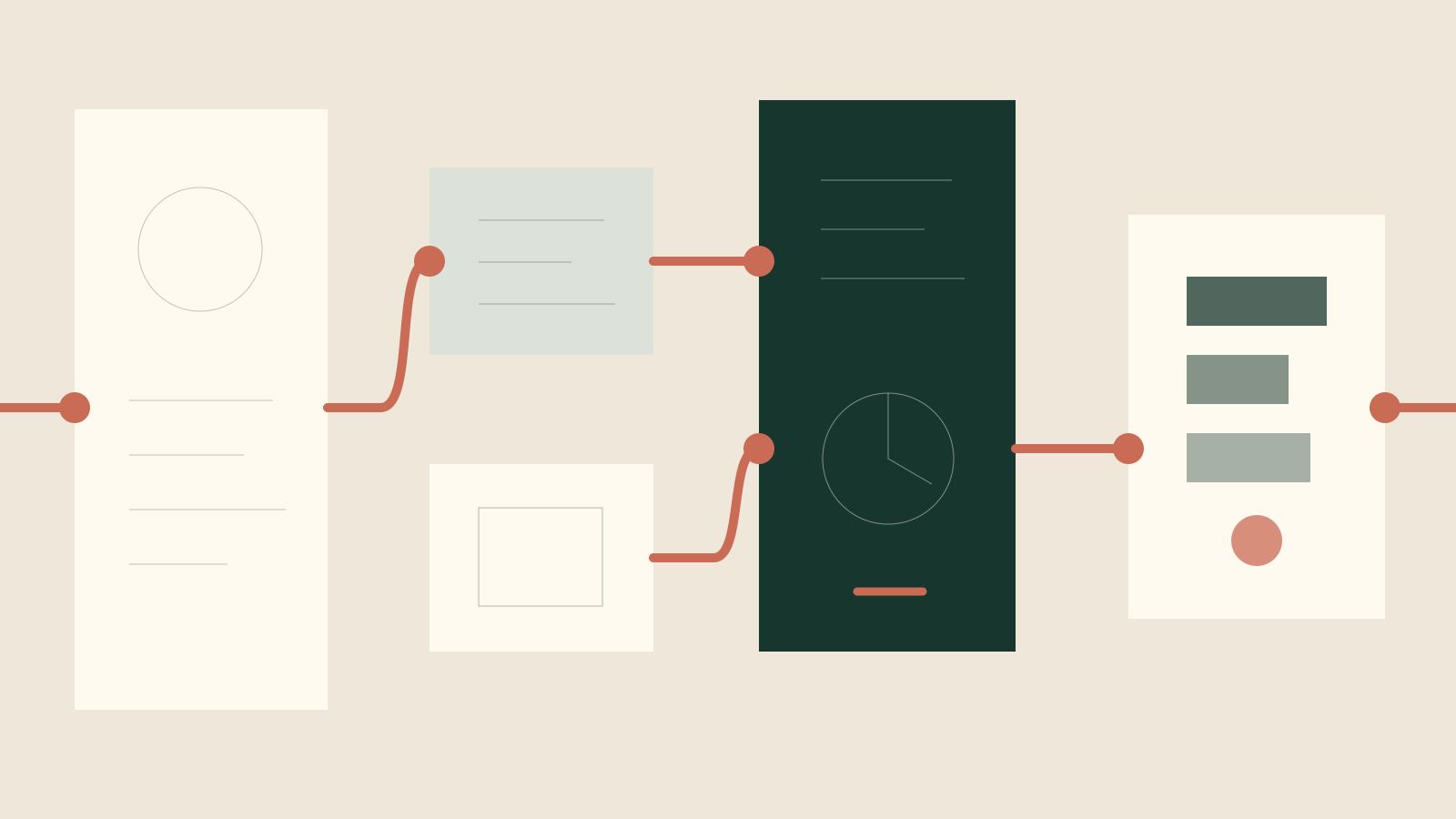
What does 48 hours mean?
48 hours is a bounded build and setup window. The clock starts only after scope, access and input are approved. It does not promise lead volume, sales, production rollout or a complete CRM migration.
Pilot workflow
What the 48-hour build can include
The final combination is confirmed in scope. The pilot is limited to one understandable workflow that can be tested and handed over.
- 01
One lead source
One approved form, inbox, webhook or bounded list with a valid operational and legal basis.
- 02
Qualification rules
Agreed fields, categories, signals, exceptions and conditions for human review.
- 03
Response path
A response draft for approval or an explicitly approved send path for defined low-risk cases.
- 04
Routing
Routing to the right person, queue or existing system according to rules and permissions.
- 05
Follow-up
One reminder or bounded sequence with stop conditions, human ownership and opt-out handling.
- 06
Log and handover
Logging and a simple handover dashboard or report showing status, failures and next steps.
Outside the boundary
What is not included
- No traffic generation
- The pilot does not create ads, SEO traffic or other demand.
- No bought lead lists
- Patrick does not supply bought lists or data with an unclear basis.
- No mass cold outreach
- This is not a spam system or a tool for mass messaging cold recipients.
- No full CRM replacement
- A complete CRM migration or rebuild sits outside the 48-hour scope.
- No guaranteed meetings
- The pilot does not guarantee meetings, revenue, lead volume or other business outcomes.
- No unapproved autonomous sending
- External messages are not sent autonomously outside the approved control model.
How the pilot works
- 01
1. Intake and scope
We select the lead source, owner, rules, desired outcome, data boundaries and what must not be built.
- 02
2. Access and start decision
You provide approved accounts, test data, copy and decision paths. Scope and start time are then confirmed in writing.
- 03
3. Build and test cases
The workflow is configured against representative normal cases, missing data, duplicates, invalid input, opt-out and escalation.
- 04
4. Approval
A named person reviews responses, routing, logs and stop conditions before any approved send path is activated.
- 05
5. Handover
You receive documented scope, ownership, test results, known limits, rollback and a simple dashboard or report.
Start gate
Checklist before the 48-hour clock starts
- 01A decision-maker and operational owner are named.
- 02One lead source and its permitted use are approved.
- 03Qualification rules, tone and escalation path are confirmed.
- 04Required access and representative test cases are available.
- 05Human approval, send permissions and stop conditions are decided.
- 06Scope, delivery boundary and operating model are approved in writing.
Baseline before testing
A measurement plan without invented targets
A baseline is documented before testing. The pilot tracks time-to-first-human-ready response, completeness, routing accuracy, follow-up completion, manual effort and qualified outcome. Targets and acceptance levels come from your current workflow, not generic promises.
Human-in-the-loop and controllable operation
- 01
Approved channels
The system handles owned or consented inbound channels, or approved lead lists and workflows. It is not positioned for spam.
- 02
Permissions
Least necessary access, named owners and separate approval for external or hard-to-reverse actions.
- 03
Logs and rollback
Important steps, decisions and failures are logged. The workflow has stop conditions and a documented rollback path.
- 04
Data minimisation
Only necessary fields are used. Storage, access and retention follow your approved requirements.
- 05
Suppression and opt-out
Suppression lists, withdrawn consent and opt-out are respected where applicable. A person owns exceptions.
- 06
Human approval
Uncertain, sensitive or contract-related responses escalate. The automation mandate is defined before start.
Responsibility split
Two operating models
BYO AI credits
Use your own approved AI accounts and credits for a lower ongoing platform cost. You own account administration, billing and availability.
You: accounts, billing and availabilityManaged operation or lease
Patrick provides the agreed operation, including AI usage monitoring, prompt/config drift checks and support, at a higher monthly cost.
Patrick: AI usage, operational checks and supportFinal scope and price are confirmed before start. No operating model is activated until ownership, access, usage and support level are agreed.
Deepen the decision
Frequently asked questions
Is the solution finished in exactly 48 hours?
The bounded build and setup window is 48 hours after scope, access and input are approved. Delays in access, decisions or third-party systems pause or move the work as agreed.
Does the system send automatically to every lead?
No. The default can be response drafts for human approval. An approved send path is used only for explicitly defined cases with the right permissions, logging and stop conditions.
Does the pilot create more leads or guarantee meetings?
No. The pilot improves an existing inbound workflow. Traffic generation, lead volume, meetings and revenue are not guaranteed.
What happens after handover?
You can take ownership with your own AI credits or select a managed operating model. Final scope, support and price are confirmed before start.
Do you have an inbound lead flow that can be bounded?
Describe the lead source, today's manual effort, the accountable person and desired outcome. Patrick will qualify whether it fits a safe 48-hour pilot or needs a different approach.
Patrick delivers the bounded AI implementation. Broader multidisciplinary marketing, creative production and delivery can be coordinated through Haien. Haien